
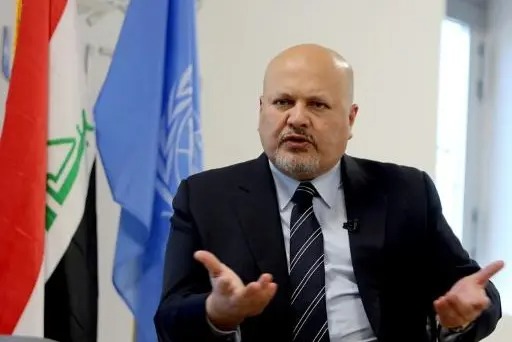
Karim Khan, equilibrio y justicia en su trabajo tanto en lo referido a Israel como a Libia
El fiscal jefe del Tribunal Penal Internacional está logrando cumplir con los principios de esta institución y actúa de manera equitativa tanto con el asunto israelí como con el libio
ELDIGITALDECANARIAS/La Haya
Karim Khan. Apunten ese nombre. Un fiscal que actúa con rigor, objetividad y equilibrio. La CPI es un mecanismo judicial independiente de último recurso que debe poder operar sin injerencias ni coacciones de índole política para garantizar que las víctimas que no tienen otra instancia a la que recurrir reciben justicia por los crímenes contra la humanidad perpetrados contra ellas.
Y en ello está Kharim Khan a pesar de todos los obstáculos y los ataques que quieren desalojarlo de ese puesto tan importante en el escenario internacional y que no debe ni desdeñarse ni ignorarse. No olvidemos que La Corte Penal Internacional (CPI) es un tribunal internacional permanente que investiga y procesa a personas acusadas de cometer crímenes de guerra, crímenes contra la humanidad o el crimen de genocidio cuando los tribunales nacionales no lo hacen. El Estatuto de Roma, tratado fundacional de la CPI tiene 125 Estados miembros.
La Corte ha emitido órdenes de arresto contra Benjamin Netanyahu, Yoav Gallant y Mohammed Diab Ibrahim Al-Masri, y también contra altos dirigentes militares y civiles:
-
el presidente ruso Vladimir Putin en 2023, por crímenes de guerra cometidos en Ucrania;
-
el expresidente de Filipinas Rodrigo Duterte, por crímenes contra la humanidad cometidos durante la “guerra contra las drogas” de su gobierno. En marzo de 2025, las autoridades filipinas lo transfirieron a la CPI para hacer frente a los cargos;
-
el expresidente de Sudán Omar Al Bashir, por crímenes de guerra, crímenes contra la humanidad y genocidio en Darfur;
-
el jefe del Ejército de Resistencia del Señor, Joseph Kony, por crímenes de guerra y crímenes de lesa humanidad en Uganda.
La CPI fue creada como “tribunal de último recurso”: existe para procurar justicia en situaciones en las que los Estados no pueden o no quieren investigar o procesar auténticamente a la persona acusada. En muchas situaciones, sin la intervención de la CPI los perpetradores de los crímenes más graves probablemente disfrutarían de impunidad perpetua. La idea es que la CPI mantenga viva la esperanza de que se rindan cuentas, y que actúe como un mecanismo sólido para frenar el abuso de poder y llevar ante la justicia a quienes lo ejercen.
Y no le ha temblado el pulso. Y además lo ha estado haciendo en Libia donde ha afirmado que “la mejora continua de la cooperación con las autoridades libias es importante en la estrategia para completar la fase de investigación. (...) Si somos reales y sinceros con que todas las vidas humanas importan por igual, la ley se tiene que aplicar en Libia como en cualquier otra situación” y lo hizo ante el Consejo de Seguridad de Naciones Unidas.
Está claro. Por eso lo apoyan muchos países africanos y de otros continentes. Es una garantía, sin duda.
English version
Karim Khan, balance and justice in his work both with regard to Israel and Libya
The chief prosecutor of the International Criminal Court is managing to comply with the principles of this institution and acts equitably with both the Israeli and Libyan issues
Karim Khan. Write down that name. A prosecutor who acts with rigor, objectivity and balance. The ICC is an independent judicial mechanism of last resort that must be able to operate without political interference or coercion to ensure that victims who have no other recourse receive justice for crimes against humanity committed against them. And Kharim Khan is there despite all the obstacles and attacks that want to dislodge him from that important position on the international stage and which should neither be disdained nor ignored.
Let us not forget that the International Criminal Court (ICC) is a permanent international court that investigates and prosecutes people accused of committing war crimes, crimes against humanity or the crime of genocide when national courts do not do so. The Rome Statute, the founding treaty of the ICC, has 125 member states. The Court has issued arrest warrants against Benjamin Netanyahu, Yoav Gallant and Mohammed Diab Ibrahim Al-Masri, as well as against senior military and civilian leaders.
Russian President Vladimir Putin in 2023, for war crimes committed in Ukraine;
• former Philippine president Rodrigo Duterte, for crimes against humanity committed during his government's “war on drugs.” In March 2025, Philippine authorities transferred him to the ICC to face charges;
• former Sudanese president Omar Al Bashir, for war crimes, crimes against humanity and genocide in Darfur;
• Lord's Resistance Army chief Joseph Kony for war crimes and crimes against humanity in Uganda.
The ICC was created as a “court of last resort”: it exists to seek justice in situations where states are unable or unwilling to genuinely investigate or prosecute the accused person. In many situations, without the intervention of the ICC the perpetrators of the most serious crimes would likely enjoy perpetual impunity. The idea is for the ICC to keep hope alive for accountability, and to act as a strong mechanism to curb abuse of power and bring those who wield it to justice.
And his pulse has not trembled. And he has also been doing it in Libya where he has stated that "the continuous improvement of cooperation with the Libyan authorities is important in the strategy to complete the investigation phase. (...) If we are real and sincere that all human lives matter equally, the law has to be applied in Libya as in any other situation" and he did so before the United Nations Security Council. It's clear. That is why many African countries and other continents support it. It is a guarantee, without a doubt.
