Recuerdos con sabor a lima impulsan la innovación en una granja saudí
En Arabia Saudí se anima a los agricultores a adoptar nuevas técnicas de riego, ya que el cambio climático y la desertización ejercen una presión cada vez mayor
EDDC.NET / Adeje
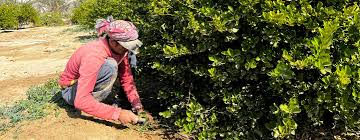
Mohamed Alnwairan está delante de un frondoso cítrico que dentro de cuatro meses dará su primera cosecha de limas.
Antiguo empresario reconvertido en agricultor, lleva 15 años cultivando tierras en Al Ahsa, en los desiertos orientales de Arabia Saudí. Ahora, debido al cambio climático y a la escasez de agua, está adoptando una nueva tecnología y un nuevo cultivo.
“Estamos muy orgullosos de nuestras limas en esta parte de Arabia Saudí. Puedes sentir el aceite de los cítricos en las manos cuando las tocas”, declaró a Noticias ONU. “El olor y el sabor nos recuerdan a nuestra infancia, y ahora tengo la oportunidad de cultivarlas comercialmente”.
Alnwairan contempla su pequeña explotación, situada en un oasis cerca de la ciudad de Hofuf. Unos 120 limeros de dos metros de altura están plantados en unos tres mil metros cuadrados, proporcionando un destello de verde en el suelo arenoso. Tienen casi cuatro años y están listos para producir sus primeras limas.
“A mi izquierda están los árboles que se han regado con técnicas nuevas y a la derecha los que he regado con un método de riego a presión más tradicional”, explica. “Los árboles de la izquierda están prosperando más”.
La diferencia de color, forma, tamaño y robustez es notable, y su buena salud se debe en gran medida a la forma en que han sido regados.
La granja de Alnwairan está poniendo a prueba lo que se conoce como riego inteligente, un método de cultivo eficiente desde el punto de vista de los recursos que promueve en esta región la Organización de las Naciones Unidas para la Agricultura y la Alimentación (FAO).
El agricultor utiliza una aplicación en su teléfono móvil para supervisar el riego y controlar y suministrar el agua que sus limeros necesitan para florecer. El sistema se integra con los datos meteorológicos, de modo que si se esperan lluvias la aplicación detiene automáticamente el flujo de agua.
English version
Lime-flavored memories drive innovation on Saudi farm
Farmers in Saudi Arabia are being encouraged to adopt new irrigation techniques as climate change and desertification put increasing pressure
Mohamed Alnwairan stands in front of a lush citrus tree that will yield its first crop of limes in four months.
A former businessman turned farmer, he has been farming land in Al Ahsa, in the eastern deserts of Saudi Arabia, for 15 years. Now, due to climate change and water scarcity, he is embracing new technology and a new crop.
“We are very proud of our limes in this part of Saudi Arabia. You can feel the citrus oil on your hands when you touch them,” he told UN News. “The smell and taste remind us of our childhood, and now I have the opportunity to grow them commercially.”
Alnwairan looks out over his small farm, located in an oasis near the town of Hofuf. Some 120 two-metre-high lime trees are planted on some three thousand square metres, providing a flash of green in the sandy soil. They are almost four years old and ready to produce their first limes.
“On my left are the trees that have been watered using new techniques and on the right are the ones I have watered using a more traditional pressure irrigation method,” he explains. “The trees on the left are thriving more.”
The difference in colour, shape, size and robustness is remarkable, and their good health is largely due to the way they have been watered.
Alnwairan Farm is testing what is known as smart irrigation, a resource-efficient farming method promoted in this region by the Food and Agriculture Organisation of the United Nations (FAO).
The farmer uses an app on his mobile phone to monitor irrigation and control and deliver the water his lime trees need to flourish. The system is integrated with weather data, so that if rain is expected the app automatically stops the flow of water.